Your best quotes sit and go cold.

Panel upgrades, EV chargers and generators are big decisions, and nobody has time to nudge them. We build the systems that follow up, sort small jobs from big ones and handle permit rescheduling, inside the software you already run.

Find my blind spots
Jay AwalJay Awal · Founder and Systems Architect

Example: a cold panel quote gets a nudge and a yes

Where the money slips out of an electrical business.

Example screen

Big quotes that go cold

Panel upgrades, EV chargers and generators are big decisions. Customers need a nudge or two, and nobody on your crew has time to give it.

Quotes that wait on you

You walk the job, write the quote and answer the questions. Quotes wait for a free night, and the customer cools off in the meantime.

Scheduling around permits and inspections

Jobs depend on dates you do not control. Every change turns into a chain of texts with the customer.

Past customers who never hear from you

The family you put an EV charger in for may want a generator or a panel next. If you do not stay in touch, they search again.

Changes agreed on site, never written down

The customer okays extra work on the job, but nobody writes it up or gets a signature, so it never makes the invoice.

Web requests and texts that sit

A form fill, a text and a panel photo come in while you are on a ladder. You sort them at night, after the customer hired someone else.

Meet your quote follow-up.

Big electrical jobs are decisions that take a nudge or two. Here is what your customer gets while you stay on the job. An example of the first system most electrical contractors should look at. Your quote wording, timing and rules go in before anything sends.

  1. Quote sentThe quote goes out from your software, and a follow-up sequence you approved starts on its own.
  2. A few days laterThe customer gets a short text or email checking in, with an easy way to ask a question or approve.
  3. They replyThe sequence stops. Questions about scope or price go to you with the quote attached. A yes gets the approval link.
  4. Back at the truckYou see which quotes are open, which got a reply and which need a personal call from you.

What slow replies and busywork cost your business this year.

Set it to match your business. Nothing is saved or sent. Sales and hours are counted separately.

A new lead hears back
Sales at risk from slow replies
$0
a year, estimated
Busywork that could run on its own0
What those paid hours cost you$0
Find my top 3 blind spots
How we calculate this

Sales at risk = leads a month × your close share × average value × 12 months × the share lost at your reply speed (0%, 30%, 55% or 70%, our planning assumptions). Busywork = 60% of your weekly hours at $35 an hour for 50 weeks. These are estimates, not promises.

Jay Awal, Founder and Systems Architect

Built by an owner, for owners.

Jay Awal has been the owner doing everything by hand at midnight. He started DispatchCo to build owner-run businesses the same kinds of systems his own businesses run on.

  • We run on it first. Jay's own businesses run on DM replies, follow-up and content systems like the ones on this page.
  • We teach it. 30+ stages, plus an AI build cohort for owners.
  • We show up. Every build starts hands-on with our team.

What we usually build first.

Quote follow-up

Panel, EV charger and generator quotes get a follow-up sequence that stops when the customer replies or books.

Job intake

Forms and texts collect the job type, address, panel details and photos before you ever roll a truck.

Permit and inspection updates

When a date moves, the customer gets the update and picks a new time, without a chain of texts from you.

Past customer outreach

Customers hear from you with an offer you approve, with consent checked first.

Electrical contractors often run ServiceTitan, Housecall Pro or Jobber, or just a phone and a calendar. We build around what you have and check how it connects before we quote the work.

Who owns each job, before and after.

You and your crew stay on the work. The follow-up stops waiting on you.

The jobTodayAfter
Following up on bigger quotesWhoever remembersFollow-up runs on its own, you close
Writing and sending quotesOwner, at nightDetails and photos collected first, so you quote from what is there
Rescheduling around inspectionsOwner, by textCustomer gets the update and picks a time
Collecting job detailsOn the first site visitAsked up front, with photos
Billing changes agreed on siteAgreed out loud, not written upChange notes go to the invoice when the job closes
Pricing exceptions and upset customersOwnerOwner, with full notes attached

The rules we build around.

Hazards go to people

Burning smells, sparks and anything unsafe follow the script you approve, and go straight to a person. If there is smoke or fire, the first instruction is to get out and call 911.

No electrical advice

It never tells a customer how to do electrical work. It books the visit and leaves the work to your licensed crew.

No made-up prices

It only quotes what you approve. Anything else gets booked for a visit.

Text consent

Automated texts need the right consent. We set up the wording and the record of it before anything sends.

Plan it. Build it. Teach it. Pick one or all three.

Every system comes with training for the people who run it.

Blueprint

Know what to build first and what it's worth.

For owners who want to know where AI pays off first.

  • Maps every quote, follow-up and job handoff in your business
  • Your AI org chart: your team plus the agents beside them
  • A ranked plan with the dollar value of each fix
Start with the audit

Credited toward your Deployment

Deployment

Your first system running in 30 days.

For owners who want it built and running.

  • Playbooks written first, then automated
  • Connects quotes, booking and follow-up to your software
  • Your team trained to run it without you
Find my blind spots

Scoped from your Blind Spot Audit

Workshop

Your team builds its own agents on real work.

For teams that need to use AI every day.

  • In person, at your office
  • You and your crew learn it on real jobs
  • Scored before and again at 60 days
Start with the audit

Scoped from your Blind Spot Audit

No surprises. You see the full scope and price before any work starts.

Inside a real build.

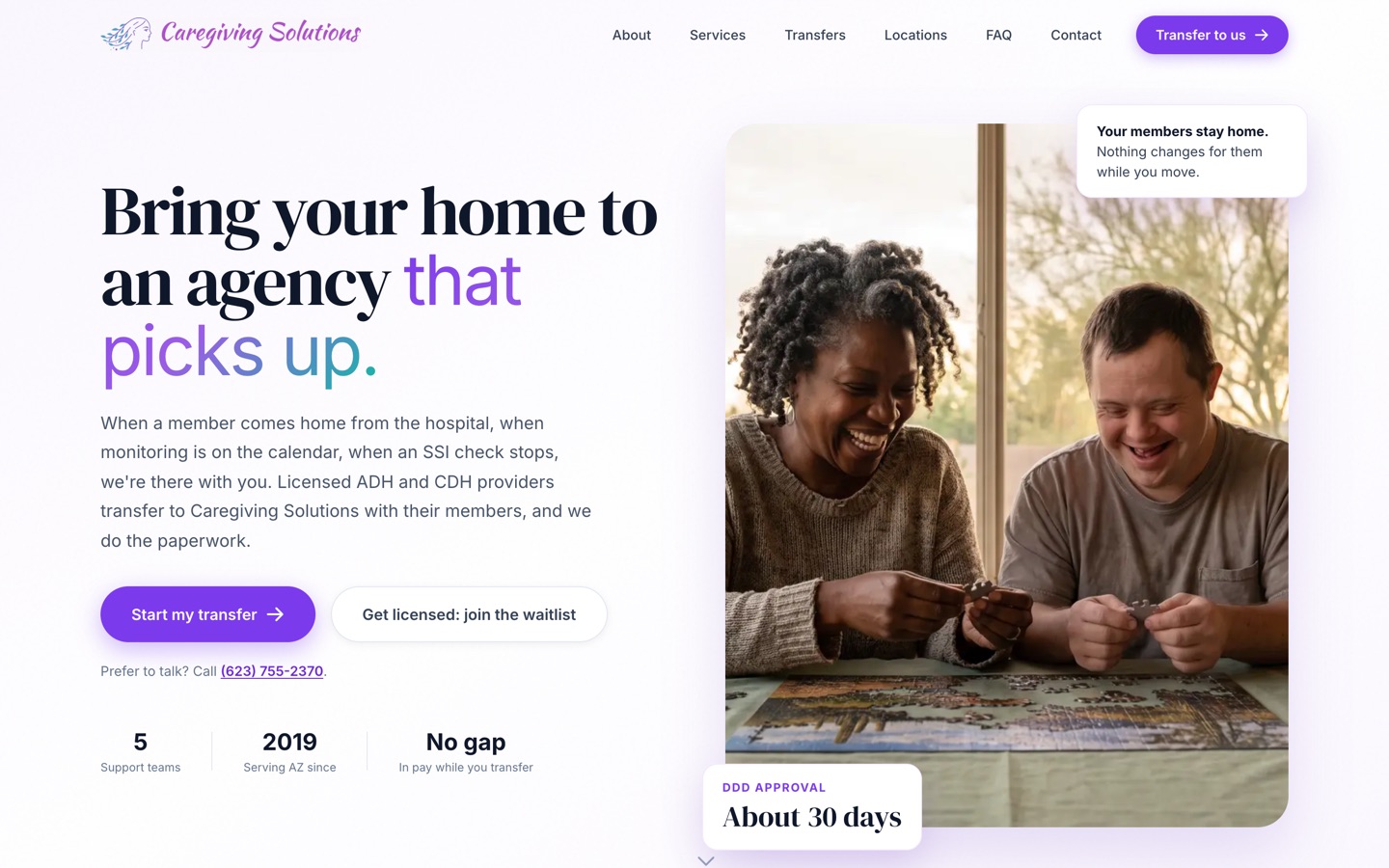
Our published case study is a care agency, not an electrical business. The problem was the same: work sat waiting for someone to send the next step. We moved their forms online and built a back end that sends it on its own. Licensing went from about 6 months to under 90 days, depending on the state agency.

See the Caregiving Solutions build
The current Caregiving Solutions homepage

Three steps. First system live in 30 days.

Today · 3 minutes

Take the Blind Spot Audit

10 questions. See your score and top 3 blind spots right away.

Start my audit
This week · 30 minutes

Walk through it with Jay

30 minutes on Zoom. We go over your report, check the numbers and agree on the first fix.

Day 30

We build it with your team

Biggest blind spot first, with your people trained to run it. The next system follows by day 90.

We don't start strong and disappear.

  • Every build starts hands-on with our team. We build alongside your people from week 1 to launch.
  • You hear from us every week. A 30-minute check-in for the length of the build.
  • You see the number. We time the jobs in week 1, both sign it, and time them again at day 90.
  • You keep everything. Every system, login and document stays yours. Stop anytime.

10 hours a week back by day 90, or we build one more system free.

For Deployment clients. The extra system is no bigger than the smallest one in your Deployment, and it's delivered within 30 days.

  • How we measure itIn week 1 we time the jobs we're automating with you, and we both sign that number. At day 90 we time them again the same way.
  • Your partThe week-1 timing, fast access and approvals, the weekly check-in, and running the work through the systems. Full terms are in the FAQ.

What a good Monday looks like by day 90.

Every open quote has a next step

You can see what is open, how old it is and who replied.

Inspections stop eating your evenings

Date changes reach the customer without a string of texts from you.

Better first visits

Your crew rolls with the details and photos already in hand.

Questions owners ask.

Does this replace my office staff?

No. It takes the follow-up nobody has time for: quotes, renewals, reminders and check-ins. Your office stays the voice customers talk to, and anyone who wants a person gets one.

Can it handle commercial work and bids?

It can collect the details on a bid request, route it to whoever handles it and follow up once the bid is out. Your estimator keeps the bid itself. We scope commercial work on a call, because every shop runs it differently.

Can it weed out jobs we do not want?

Yes, within your rules. You set your service area, minimums and job types, and it can politely turn away or refer what you do not take.

We are in our busy season. Can this wait?

It can. We can map it now while the pain is fresh and go live when you have room, so the slow season starts with a full follow-up list. Either way, we do the build inside your accounts.

What if the AI books something wrong?

It only books what your rules allow, and you can see and change everything. We test against your real job types before it goes live, and we watch it closely in the first weeks.

Is my license or liability affected?

It does not give electrical advice or do design work. It books visits and collects information, and your licensed people make the calls. Have your own attorney or insurer weigh in if you want it checked.

Can you do anything with our old customer list?

Often that is the fastest win. Past customers already know you. We check what consent you have first, because marketing texts have real legal rules. Where text consent is missing, we start with email.

I have paid vendors before and got nothing. Why is this different?

You own every system, login and document. You see the work at a weekly check-in, and you can stop anytime and keep what is built. Deployment clients also get a written guarantee, measured against a baseline we both sign in week 1.

What does it cost?

It depends on what we build, so we scope it from your Blind Spot Audit and a call. A 6-person shop and a 60-person company need different things. You see the full scope and price before any work starts.

Will my team actually use it?

We build it inside the software they already log into, write the playbooks with them and train them on their own real work. People use what they helped shape.

How much of my time does this take?

About 30 minutes a week to approve things and tell us what's off. You know your business, we know the build.

Am I locked in?

No. Blueprint, Deployment and Workshop are separate decisions. Stop after any of them and keep everything we made.

How does the 10-hour guarantee work?

It comes with every Deployment. In week 1 we time the jobs we're automating with you and we both sign that number. At day 90 we time them again the same way. If your team isn't saving 10 hours a week, we build one more system free, no bigger than the smallest one in your Deployment, within 30 days. It applies when you've done your part: the week-1 timing, access within 5 business days, the weekly check-in, playbook approvals within 3 business days, and running the work through the systems.

See what to take off your plate first. It takes 3 minutes.

The Blind Spot Audit shows where AI and systems would save you the most time and money. See your score and top 3 blind spots right away.

10 questionsResults right away

Find my blind spots10 questions · Results right away