One desk carries every deal.

Your transaction coordinator is tracking dozens of deadlines, you or your managing broker are reviewing files at night and new agents keep asking the same questions. We build the systems that keep deals moving and files complete, so the back office stops being the limit on your growth.

Find my blind spots
Jay AwalJay Awal · Founder and Systems Architect

Example: an agent’s file is incomplete

Where a brokerage’s back office gets stuck.

Example screen

One desk tracks every date

Inspections, appraisals and contingencies live in one coordinator’s inbox and spreadsheet. One missed date can put a deal at risk.

Files that fail broker review

A missing disclosure or signature turns up at the end, and the closing waits while everyone hunts for it.

Leads nobody follows up

Office leads get handed to an agent, get one reply and go quiet. Nobody sees which ones were dropped.

Past clients who never hear from you

Most of your next deals come from past clients and their referrals, and staying in touch depends on each agent remembering.

The broker answers everything

Which form, which vendor, which rule. New agent setup goes differently each time, and the answers live in one person’s head.

Inquiries waiting in a shared inbox

Website forms, texts and listing emails sit until someone claims them, and the buyer is already talking to another agent.

Meet your deal tracker.

Every date, every missing page and a clear next step for your agents, so no deal depends on one desk remembering. An example of a contract moving through the back office. Your broker sets the checklist and the rules.

  1. Contract signedThe agent uploads it, and key dates get pulled into a draft timeline for your coordinator to check.
  2. The same dayOnce it is approved, tasks and reminders go out to the agent and everyone on your side of the deal.
  3. Something is missingThe agent gets a note naming the exact page or signature still needed.
  4. Clear to closeThe file is complete when it reaches your broker, who reviews it and signs off.

What slow lead follow-up and back office drag cost you this year.

Set it to match your business. Nothing is saved or sent. Sales and hours are counted separately.

A new lead hears back
Sales at risk from slow replies
$0
a year, estimated
Busywork that could run on its own0
What those paid hours cost you$0
Find my top 3 blind spots
How we calculate this

Sales at risk = leads a month × your close share × average value × 12 months × the share lost at your reply speed (0%, 30%, 55% or 70%, our planning assumptions). Busywork = 60% of your weekly hours at $35 an hour for 50 weeks. These are estimates, not promises.

Jay Awal, Founder and Systems Architect

Built by an owner, for owners.

Jay Awal has been the owner doing everything by hand at midnight. He started DispatchCo to build owner-run businesses the same kinds of systems his own businesses run on.

  • We run on it first. Jay's own businesses run on DM replies, follow-up and content systems like the ones on this page.
  • We teach it. 30+ stages, plus an AI build cohort for owners.
  • We show up. Every build starts hands-on with our team.

What we usually build first.

Deadline tracking

Contract dates become a timeline with reminders, checked by your coordinator.

File completeness

Missing documents get chased before the file reaches your broker.

Lead and past client follow-up

Office leads and past clients get steady follow-up, and you can see who dropped what.

Office answers and onboarding

Agents get your approved answers with the source, and new agents get one path through setup.

Brokerages often run SkySlope, Dotloop, Follow Up Boss, BoldTrail or Lofty. We check how your setup connects before we quote.

Who owns each job, before and after.

Your coordinator and broker stay in control. They stop being the reminder system.

The jobTodayAfter
Tracking contract datesCoordinator, in a spreadsheetDraft timeline, coordinator checks it
Chasing missing documentsCoordinator, by emailAgent gets exact list and reminders
Following up on office leadsWhichever agent got itSteady follow-up, visible to the broker
Answering office questionsBroker, all dayApproved answers with the source
New agent setupBroker, from memoryOne guided path
Final file reviewYour brokerYour broker, always

The rules we build around.

Your broker supervises

The broker carries the responsibility, so people review contract dates and sign off on every file.

No legal advice

It tracks dates and documents. Questions about contract terms go to your broker or attorney.

Client information

Financial documents stay in the tools you have cleared, with access limited to the people on the deal.

Plan it. Build it. Teach it. Pick one or all three.

Every system comes with training for the people who run it.

Blueprint

Know what to build first and what it's worth.

For owners who want to know where AI pays off first.

  • Maps your deal flow from contract to commission
  • Your AI org chart: your team plus the agents beside them
  • A ranked plan with the dollar value of each fix
Start with the audit

Credited toward your Deployment

Deployment

Your first system running in 30 days.

For owners who want it built and running.

  • Playbooks written first, then automated
  • Connects deadlines, documents and onboarding to your tools
  • Your team trained to run it without you
Find my blind spots

Scoped from your Blind Spot Audit

Workshop

Your team builds its own agents on real work.

For teams that need to use AI every day.

  • In person, at your office
  • Your coordinators and agents learn it on real files
  • Scored before and again at 60 days
Start with the audit

Scoped from your Blind Spot Audit

No surprises. You see the full scope and price before any work starts.

Inside a real build.

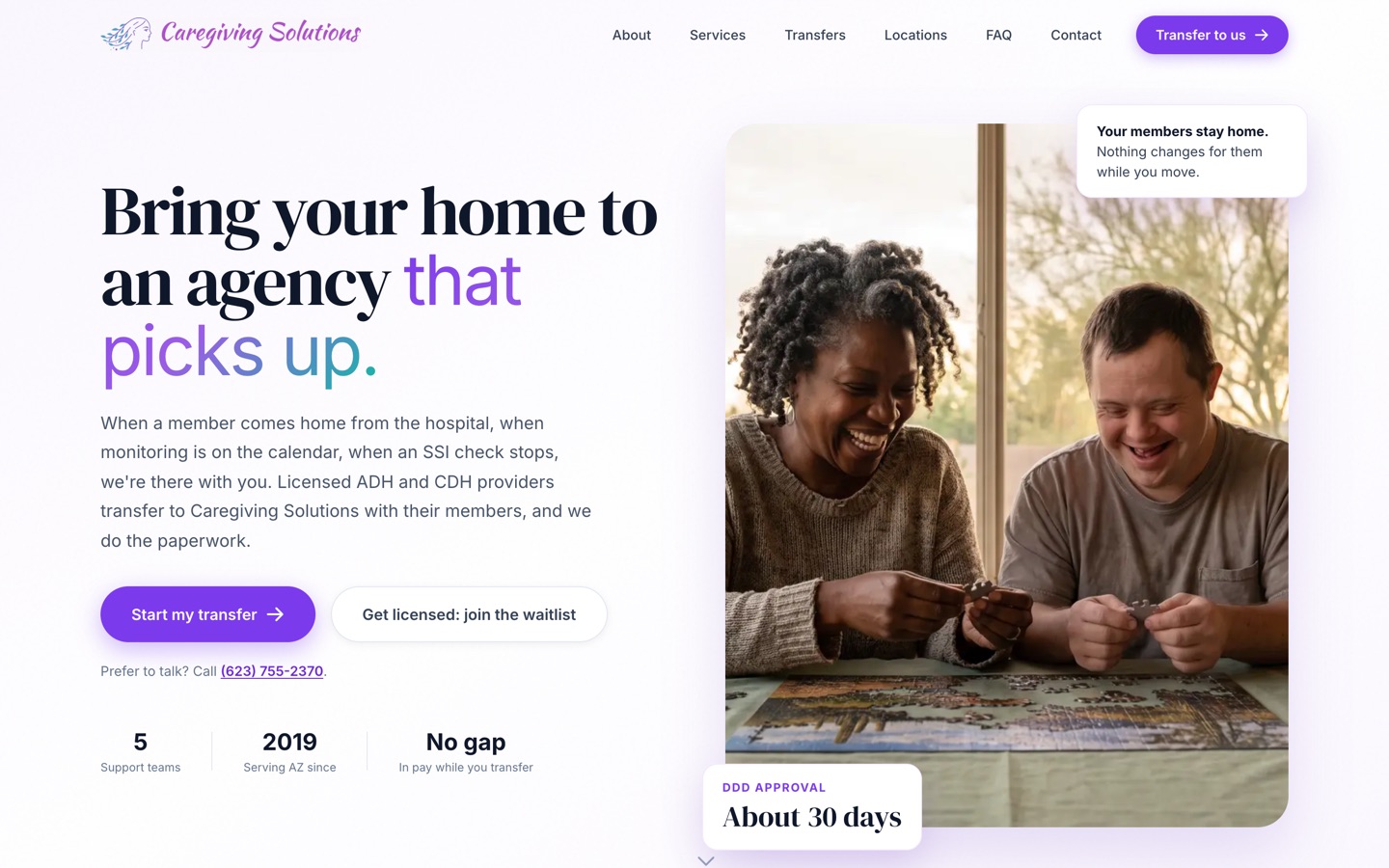
Our published case study is a care agency, not a real estate business. The problem was the same: work sat waiting for someone to send the next step. We moved their forms online and built a back end that sends it on its own. Licensing went from about 6 months to under 90 days, depending on the state agency.

See the Caregiving Solutions build
The current Caregiving Solutions homepage

Three steps. First system live in 30 days.

Today · 3 minutes

Take the Blind Spot Audit

10 questions. See your score and top 3 blind spots right away.

Start my audit
This week · 30 minutes

Walk through it with Jay

30 minutes on Zoom. We go over your report, check the numbers and agree on the first fix.

Day 30

We build it with your team

Biggest blind spot first, with your people trained to run it. The next system follows by day 90.

We don't start strong and disappear.

  • Every build starts hands-on with our team. We build alongside your people from week 1 to launch.
  • You hear from us every week. A 30-minute check-in for the length of the build.
  • You see the number. We time the jobs in week 1, both sign it, and time them again at day 90.
  • You keep everything. Every system, login and document stays yours. Stop anytime.

10 hours a week back by day 90, or we build one more system free.

For Deployment clients. The extra system is no bigger than the smallest one in your Deployment, and it's delivered within 30 days.

  • How we measure itIn week 1 we time the jobs we're automating with you, and we both sign that number. At day 90 we time them again the same way.
  • Your partThe week-1 timing, fast access and approvals, the weekly check-in, and running the work through the systems. Full terms are in the FAQ.

What a good month looks like by day 90.

No deal rides on one desk

Every deal has a timeline someone checked, and anyone on the team can see it.

Cleaner files

Paperwork is complete before it reaches your broker.

Leads get worked

You can see every office lead and its next step.

Questions owners ask.

Will it read our contracts correctly?

It drafts the timeline, and a person checks every date before anything goes out. Contract forms differ by state, so we test on yours.

Does this replace our transaction coordinator?

No. It gives them a better starting point and fewer things to track from memory, so they can handle more deals without dropping one.

Can it help us recruit agents?

It can make the follow-up with candidates consistent and speed up onboarding. Whether recruiting is your best first system is what the Blind Spot Audit is for.

What if it gets something wrong?

It only does what your rules allow, and your team can see and change everything. We test against your real situations before it goes live, and we watch it closely in the first weeks.

Do we have to leave SkySlope or Dotloop?

Usually not. We build on what your office already logs into, and we tell you up front if something cannot connect.

I have paid vendors before and got nothing. Why is this different?

You own every system, login and document. You see the work at a weekly check-in, and you can stop anytime and keep what is built. Deployment clients also get a written guarantee, measured against a baseline we both sign in week 1.

What does it cost?

It depends on what we build, so we scope it from your Blind Spot Audit and a call. A 6-person shop and a 60-person company need different things. You see the full scope and price before any work starts.

Will my team actually use it?

We build it inside the software they already log into, write the playbooks with them and train them on their own real work. People use what they helped shape.

How much of my time does this take?

About 30 minutes a week to approve things and tell us what's off. You know your business, we know the build.

Am I locked in?

No. Blueprint, Deployment and Workshop are separate decisions. Stop after any of them and keep everything we made.

How does the 10-hour guarantee work?

It comes with every Deployment. In week 1 we time the jobs we're automating with you and we both sign that number. At day 90 we time them again the same way. If your team isn't saving 10 hours a week, we build one more system free, no bigger than the smallest one in your Deployment, within 30 days. It applies when you've done your part: the week-1 timing, access within 5 business days, the weekly check-in, playbook approvals within 3 business days, and running the work through the systems.

See what to take off your plate first. It takes 3 minutes.

The Blind Spot Audit shows where AI and systems would save you the most time and money. See your score and top 3 blind spots right away.

10 questionsResults right away

Find my blind spots10 questions · Results right away